All news
TechNotes #1 1 min read

How do you separate the data of two veterinary practices?

In the cloud, what really prevents one veterinary practice from accessing another practice’s data? The answer depends above all on the architecture.

Pierre Bony

Pierre Bony

President, co-founder and CTO
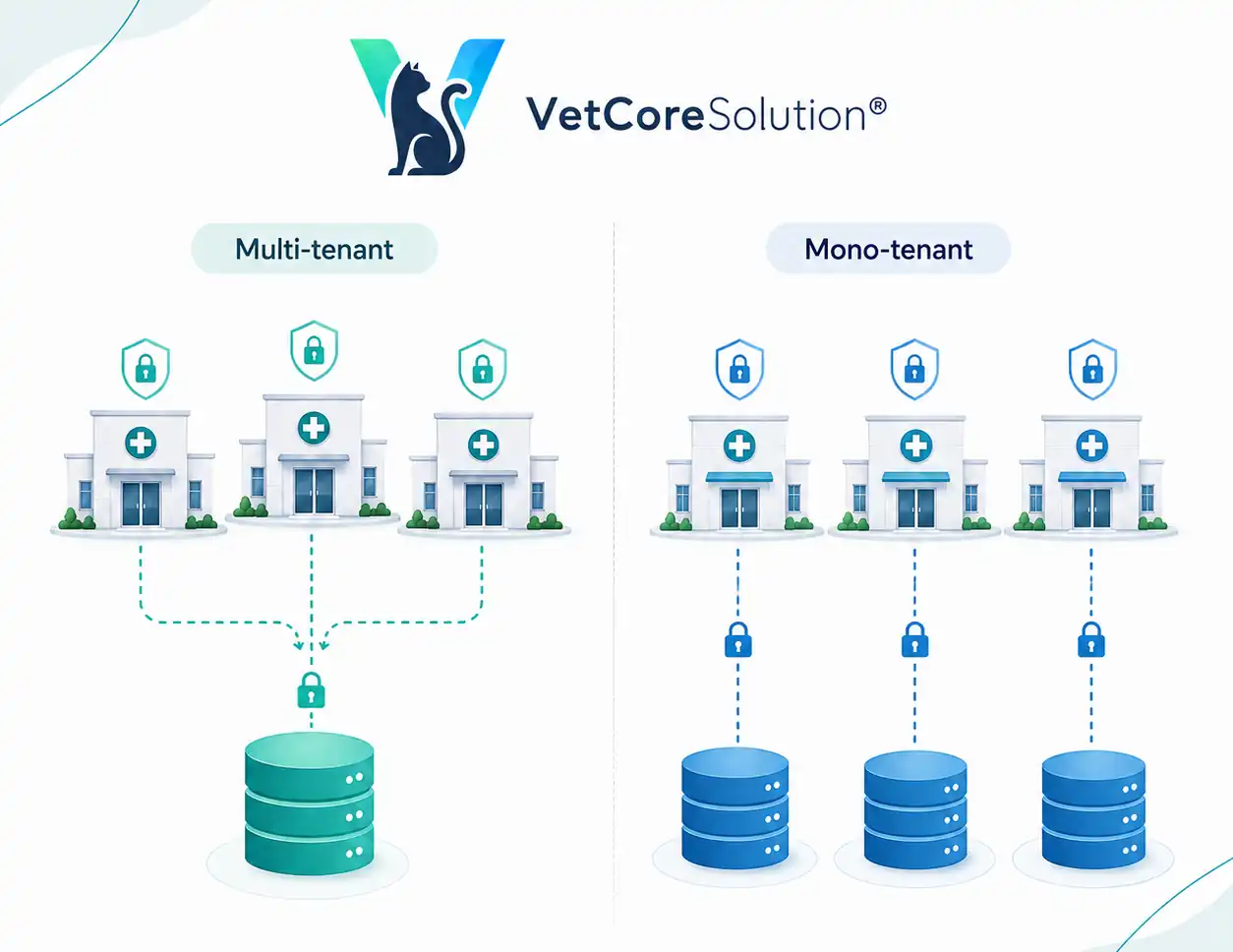
Diagram comparing data isolation in multi-tenant and mono-tenant architectures for veterinary practices

In your veterinary practice management software, what really prevents you from one day coming across the data of the practice next door?

But with cloud, SaaS, or fully web-based software… the question becomes much more interesting. Because behind the word “cloud” are very different architectures.

One database shared by several practices

In some cases, several practices share the very same database. This is known as logical separation: every piece of data — client, animal, invoice, consultation entry… — must be correctly linked to your practice’s identifier.

CoreFactor’s choice for VetCoreSolution®

We made a different choice: a dedicated database for each practice. In technical terms, this is known as “mono-tenant”.

Why this choice? Because strict data isolation is not a minor technical detail. It is a decision about architecture, security, and responsibility.

And of course… everything is encrypted. But that is a topic for another TechNote! 😉
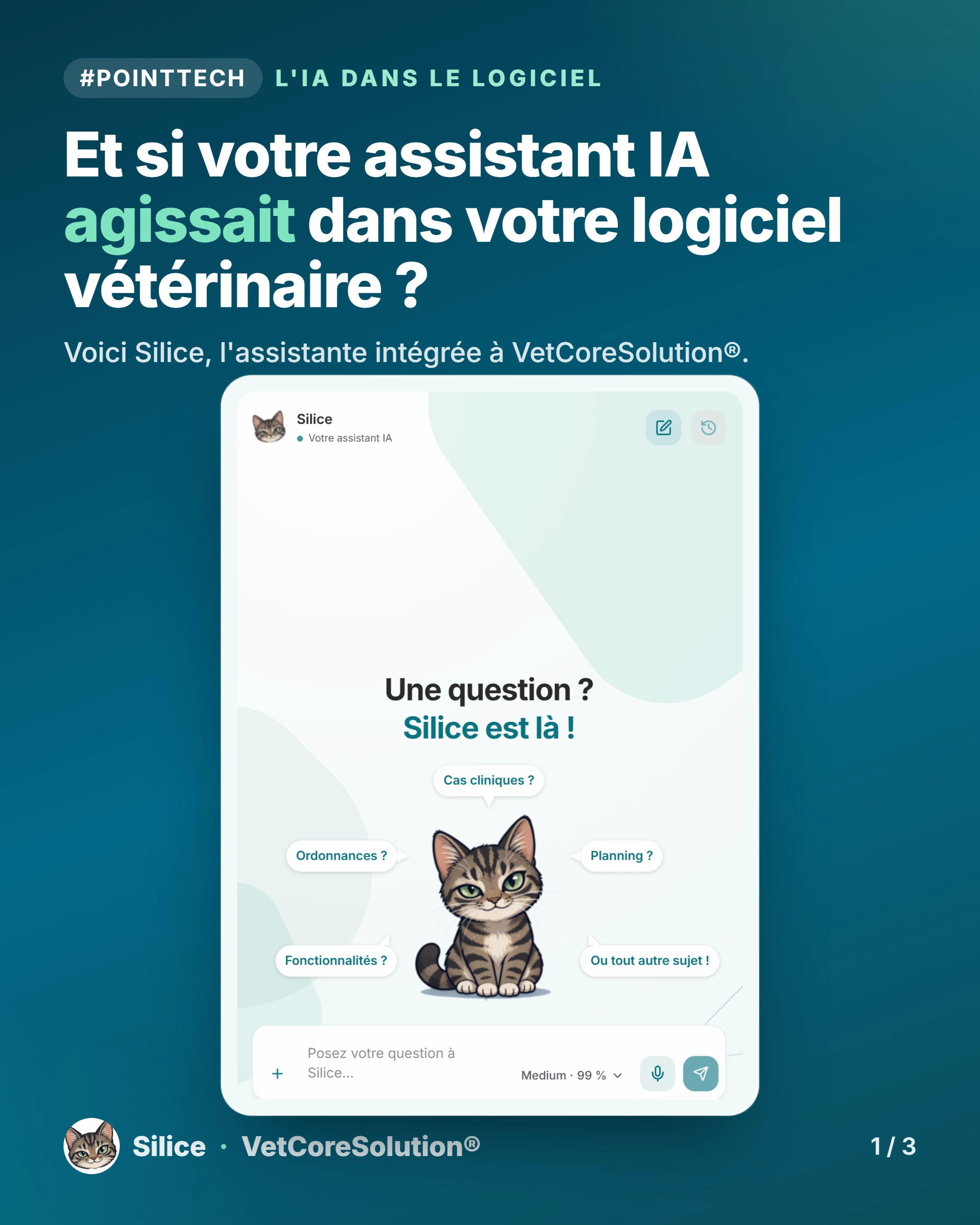
Introducing Silice, the AI assistant built into VetCoreSolution®, showing its French chat interface and cat mascot
TechNotes #66 min read

How can an AI assistant be integrated into veterinary software without compromising security?

With Silice, the AI assistant built into VetCoreSolution®, permissions remain enforced by the server and every change requires the user's approval.

Read article
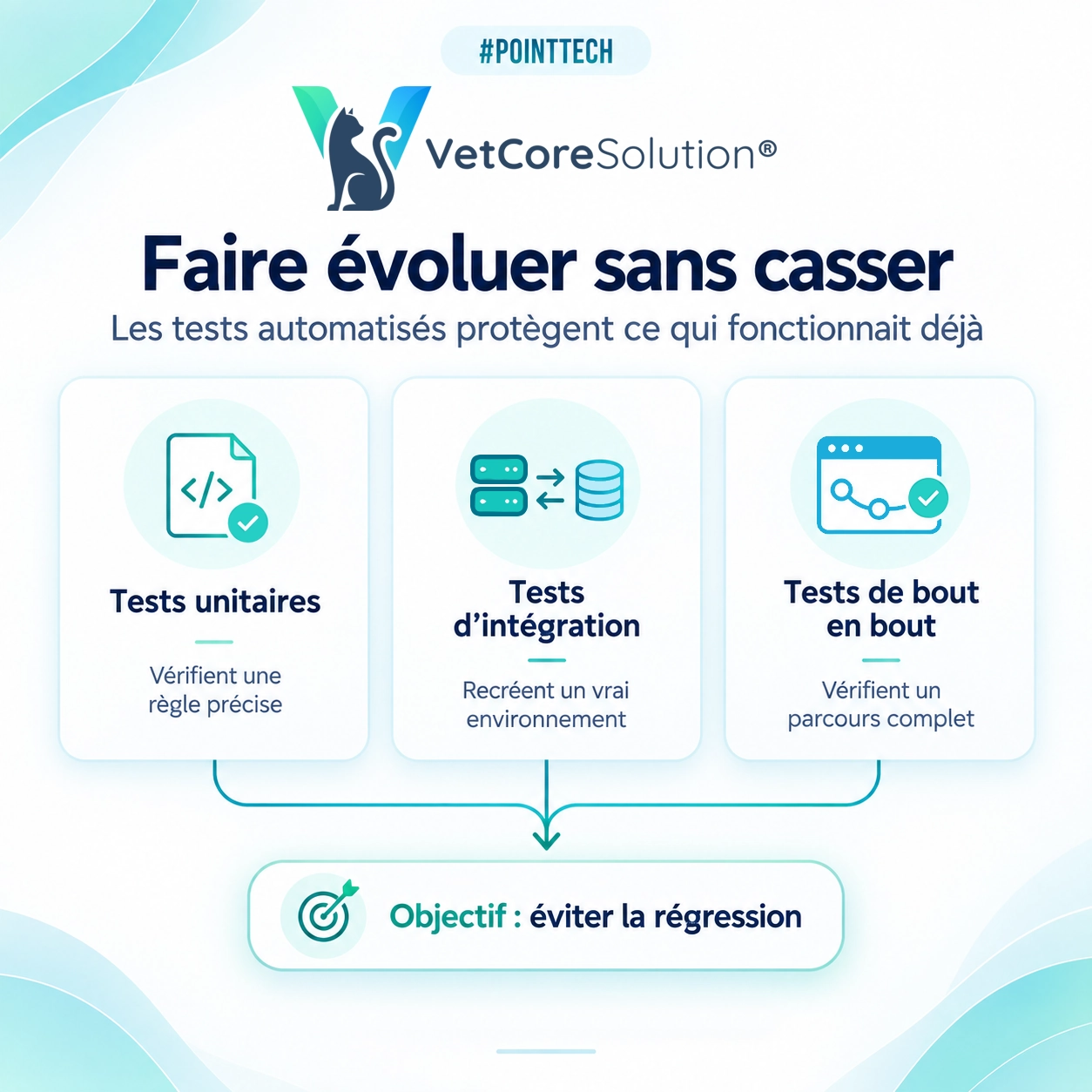
Evolving without breaking: unit, integration, and end-to-end tests to prevent regressions in VetCoreSolution®
TechNotes #53 min read

How can software evolve without breaking what worked yesterday?

At CoreFactor, we approach this question at several levels. Because a correct calculation is not enough to make software work.

Read article
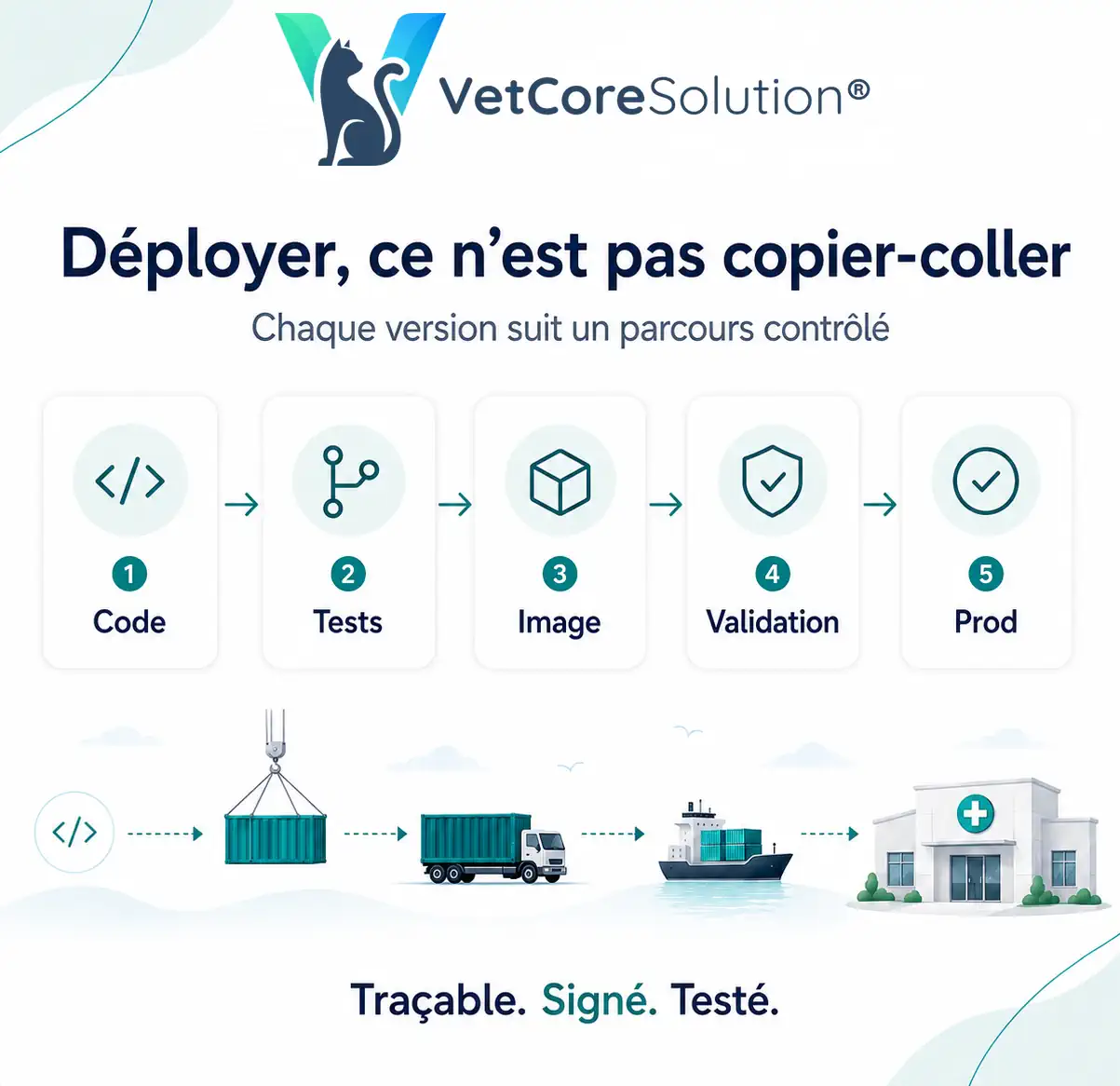
The five stages of the VetCoreSolution deployment pipeline, from code to production
TechNotes #43 min read

A VetCoreSolution® release is ready… what happens next?

Before reaching a veterinary practice, every release passes through five control stages that let us prove its origin, contents, and the tests it has passed.

Read article