Should your veterinary software be a black box?
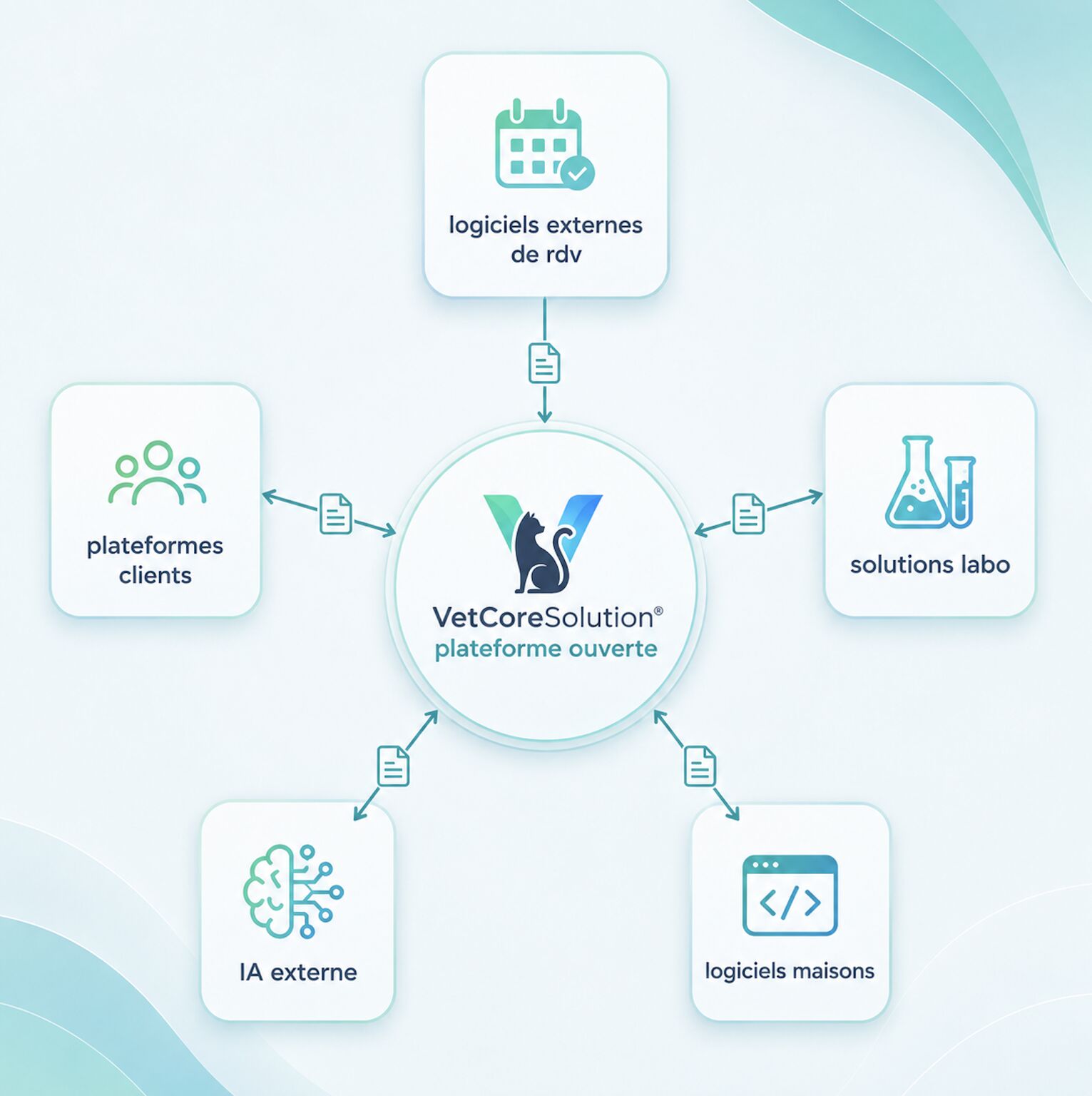
With VetCoreSolution®, CoreFactor has chosen to build an open veterinary platform: each clinic controls its API keys, integrations, and the permissions it grants.

Pierre Bony
President, co-founder and CTO
In many business software products, everything is closed off. The data is there, the features are there, but as soon as a clinic wants to connect an external tool, automate a process, or plug in an in-house solution… everything becomes complicated.
Choosing an open platform
At CoreFactor, we made a different choice for VetCoreSolution®: to build an open veterinary platform.
Of course, our goal is to build in the features veterinary clinics need every day. Of course, we will offer preconfigured integration components for as many solutions as possible.
But we also want to go further: to let you connect your own tools, based on your needs.
The idea is not to open everything without safeguards, but to give clinics genuine control over their integrations.
Why does this matter?
Because veterinary practice management software should not dictate your entire ecosystem.
- Do you use VetAppli, Zoodiag, or another tool?
- An external AI solution for your consultations?
- An appointment-booking solution?
- Software developed in-house by your group?
Great. Bring it with you.
Our philosophy is simple: we provide features, but we are not arrogant enough to think we will be the best at everything. If you have a better tool for a specific use, our role is not to stand in your way, but to help you integrate it properly.
And with API keys controlled by the clinic, you can even connect in-house software without asking for our approval.
APIs exposed using the OpenAPI standard
To make integration easier, we expose our APIs using the OpenAPI standard:
- Public data models.
- Documented endpoints.
- Configurable permissions.
- Openness designed into the architecture from the outset.
Not locking clinics into an ecosystem
The point is not simply to have modern software. The point is to avoid locking clinics into an ecosystem they no longer control.